A comprehensive exploration of protein functions, types, sources, and their significance in general health
Foundational knowledge about protein's role in bodily functions
Protein is a macronutrient composed of amino acids, which are organic compounds that serve as building blocks for numerous bodily structures and functions. The body contains approximately 20 different amino acids, of which nine are classified as essential, meaning they must be obtained through diet.
Classification of protein sources and their characteristics
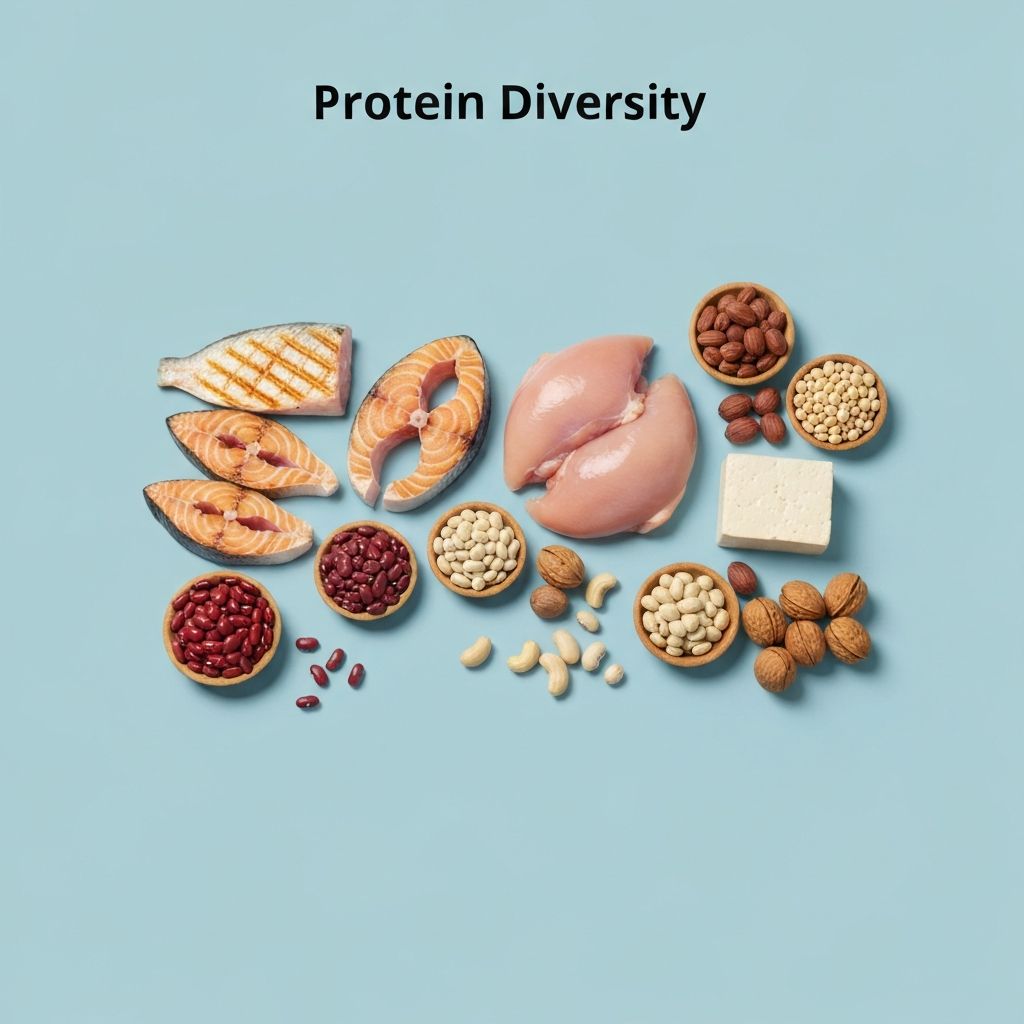
Sources including poultry, fish, beef, eggs, and dairy products. These proteins contain all nine essential amino acids and are typically high in bioavailability, meaning the body efficiently absorbs and utilizes these proteins.
Common sources: Chicken, fish, beef, turkey, eggs, Greek yogurt, cottage cheese.
Sources including legumes, nuts, seeds, whole grains, and vegetables. Most plant proteins lack one or more essential amino acids, though combining different plant sources throughout the day provides complete amino acid profiles.
Common sources: Lentils, chickpeas, beans, tofu, tempeh, nuts, seeds.
Complete proteins contain all nine essential amino acids. Most animal proteins are complete. Incomplete proteins lack one or more essential amino acids and are more common in plant sources.
Strategy: Combining incomplete proteins throughout meals provides complete amino acid intake.
Quality relates to amino acid profile and digestibility. High-quality proteins contain all essential amino acids in adequate proportions and are efficiently utilized by the body. Methods like PDCAAS (Protein Digestibility Corrected Amino Acid Score) assess protein quality.
General considerations for protein consumption in a balanced diet
Protein requirements vary based on multiple factors including age, physical activity level, and overall health status. General dietary guidelines provide frameworks for understanding protein intake in the context of balanced nutrition.
For sedentary individuals, recommendations typically suggest 0.8 grams of protein per kilogram of body weight daily. Individuals engaged in regular physical activity may have different considerations.
Rather than focusing on specific targets, a practical approach emphasizes including diverse protein sources at meals and snacks, ensuring consistent intake of essential amino acids throughout the day.
Incorporating multiple protein sources throughout daily meals ensures comprehensive amino acid intake and provides varied micronutrient profiles. Combining animal and plant-based sources offers benefits of both categories.
Overview of diverse protein options for informed dietary choices
| Protein Source | Type | Protein Content (per 100g) | Key Characteristics |
|---|---|---|---|
| Chicken Breast | Animal | 31g | Lean, complete protein, versatile, widely available |
| Salmon | Animal | 25g | Complete protein, omega-3 fatty acids, supports various functions |
| Eggs | Animal | 13g (per egg) | Complete protein, bioavailable, versatile preparation options |
| Greek Yogurt | Animal | 10g (per 100ml) | Complete protein, probiotics, calcium, convenient |
| Lentils | Plant | 9g (cooked) | Good plant protein, fiber-rich, affordable, versatile |
| Chickpeas | Plant | 8g (cooked) | Plant protein, fiber, micronutrients, culturally diverse |
| Tofu | Plant | 15g | Complete plant protein, versatile texture, absorbs flavors |
| Almonds | Plant | 21g | Plant protein, healthy fats, portable, nutrient-dense |
| Black Beans | Plant | 8g (cooked) | Plant protein, fiber, minerals, budget-friendly |
| Beef | Animal | 26g | Complete protein, iron, B vitamins, nutrient-dense |
Strategies for incorporating diverse protein sources into daily meals
Eggs provide complete protein with versatile preparation. Greek yogurt offers convenience and complements granola and fruit. Plant-based options include tofu scrambles and legume-based dishes.
Including lean proteins like chicken or fish, combining legumes with grains for complete amino acid profiles, and incorporating vegetables ensures diverse nutrient intake alongside protein.
Nuts, seeds, cheese, and yogurt provide protein and satiety between meals. These options support consistent nutrient intake throughout the day and help maintain energy levels.
Mixing animal and plant-based proteins in meals creates comprehensive amino acid profiles and diverse micronutrient combinations. Examples include adding legumes to grain bowls and pairing fish with vegetable sides.
Important: This page provides educational information on protein from a nutritional science perspective. It is not intended as medical advice, personal dietary recommendations, or treatment for any condition. Individual nutritional needs vary based on personal circumstances. Consult qualified healthcare professionals for personalized guidance.